


What is CloudFlare and how it gives Speed and Security to your website ?

CloudFlare is a Content Delivery Network (CDN) that sits between websites and their visitors to make sites faster, more secure, and more reliable. It’s one of the largest pieces of internet infrastructure, and a big share of websites route traffic through it.
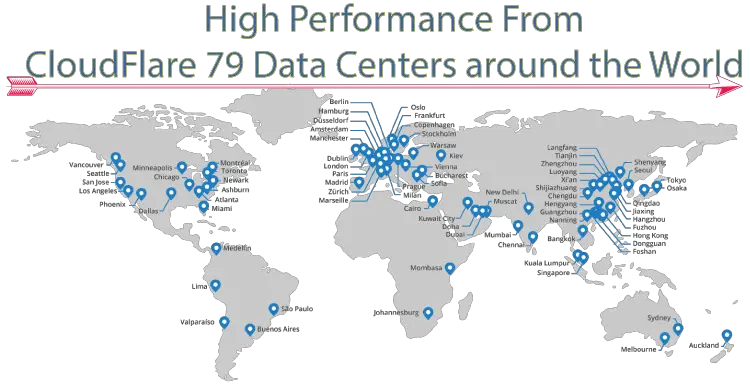
Cloudflare has data centers in 330 cities across more than 120 countries. When you put a site behind Cloudflare, you point your domain’s DNS at them, so visitor requests go to Cloudflare’s global network of data centers first. Cloudflare can then serve cached copies of your content from a location near the visitor, filter out malicious traffic, and pass only legitimate requests to your actual server.
What it offers:
- CDN (content delivery network) : caches your site’s files worldwide so pages load faster.
- DDoS protection : absorbs floods of junk traffic meant to knock a site offline.
- Web application firewall and bot management : blocks attacks and scrapers.
- DNS : it runs one of the fastest public DNS services, including the 1.1.1.1 resolver.
- SSL/TLS : provides HTTPS encryption for sites, often for free.
- Developer platform : Workers (serverless code that runs at the edge), R2 (object storage), and Pages (static site hosting).
- Zero Trust / security tools : replaces traditional VPNs for companies securing employee access to internal apps.
Its free tier is a big reason for its popularity, since small sites and hobbyists get basic protection and CDN service at no cost.
The tradeoff is that because so much of the web depends on Cloudflare, an outage on their end can take down large chunks of the internet at once.
Yes, this is because CloudFlare has data centers in 330 cities across more than 120 countries unlike the single server of your Web Hosting. You will get much higher loading speed by using CloudFlare. Global visitors, mostly static content (images, CSS, JS) will likely see a real improvement, because files are served from a nearby location.
Speed also isn’t the only benefit:
- DDoS and bot protection : a fast site can still be knocked offline by a flood of traffic.
- Free SSL and DNS : easy HTTPS and fast DNS management.
- Lower load on your host : cached requests never reach your server, which helps during traffic spikes.
- Extra security features : firewall rules, rate limiting, and similar tools.
How Does CloudFlare Work ?
After you activate Cloudflare (by pointing your domain’s DNS to it), visitor requests go to Cloudflare’s network before reaching your server. Cloudflare filters out malicious traffic, and the data center closest to the visitor serves cached copies of your static content. If it doesn’t have a copy yet, it fetches it from your server and caches it for later visitors. This can improve loading speed, reduce load on your hosting, and add protection against attacks, with the size of the speed gain depending on your audience and content.
CloudFlare also provides a number of excellent features which are very useful to your website.
Benefits of CloudFlare
There are a number of benefits of using CloudFlare –
1. High Performance
CloudFlare provides a big improvement to your website loading speed. A fast loading speed makes users to stay longer, and that adds to the SEO benefits. Just note down your website loading speed at present and compare it with the loading speed you get after activating CloudFlare, you will see upto 70% to 90% difference.
2. Protection against Attacks and Spam
CloudFlare protects your website against all type of attacks like DDoS (Denial of Service), Layer 3/4 attacks, DNS amplification attacks, etc. CloudFlare filters out most of the spam attacks too. This is good for your website’s health.

In your CloudFlare account you can choose between 3 types of security levels – Easy, Medium and High.
What is SSL Certificate? – Every website needs an SSL certificate today, for two main reasons:
- It secures the connection. Data passing between your visitors and your site is encrypted, so it can’t easily be intercepted or tampered with.
- It avoids browser warnings. Chrome and other browsers label sites without SSL as “Not Secure,” which can put visitors off.
3. Save Server Bandwidth
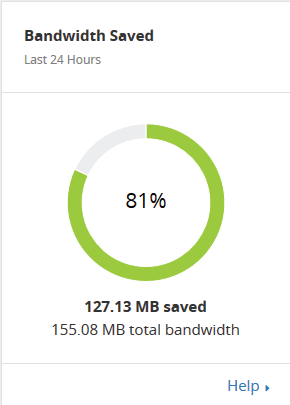
Websites receive a lot of unwanted traffic from spam and bots, and it eats up bandwidth for no benefit. Cloudflare filters out much of this traffic before it reaches your server, and its caching also reduces the number of requests your host has to handle, so you use less bandwidth overall.
This matters most if your host charges for bandwidth, as cloud providers like Amazon Web Services (AWS) and Google Cloud do.
4. Prevents Site from Crashing
CloudFlare’s large number of Data Centers does automatic load sharing. You don’t have to think about website high load as CloudFlare will prevent it from crashing during high traffic.
CloudFlare Setup in your Website
It is only a 5 minute procedure to activate CloudFlare in your website. The steps listed below will explain all this to you –
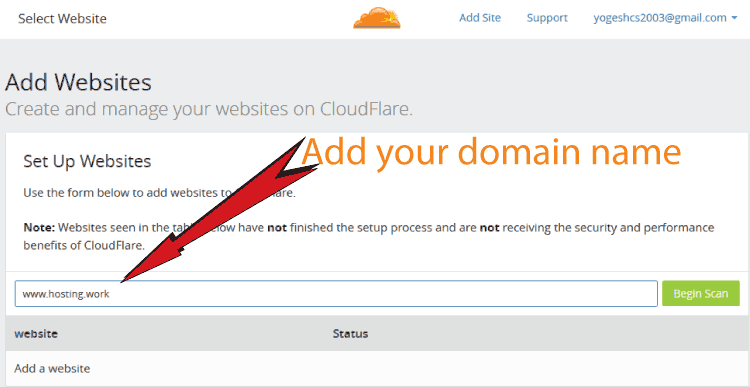
First create your free account in CloudFlare then click Add Site link to add your Website’s Domain Name.

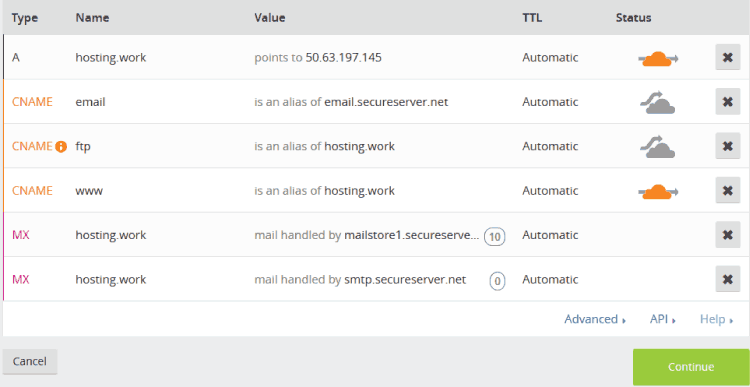
CloudFlare will Scan your domain and show it’s DNS Records. By Default CloudFlare will be applied to the A and CNAME Records but you can also apply CloudFlare on other DNS Records by clicking on the status icon given next to them.
Click Continue button at the bottom to proceed.
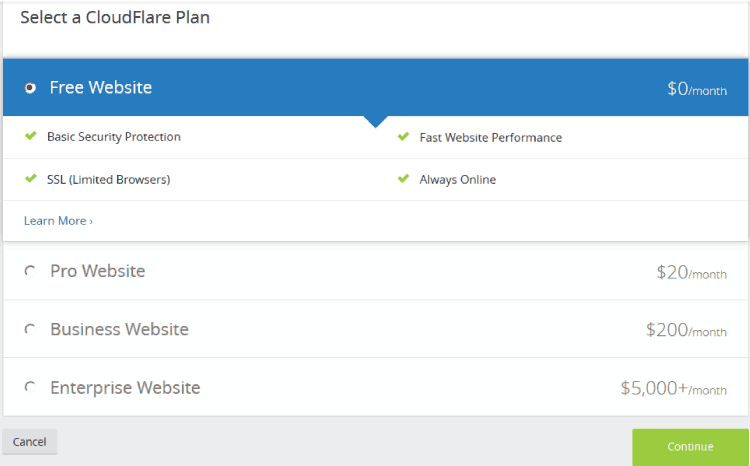
CloudFlare will ask you to select a plan – select Free Website Plan and click continue.
CloudFlare will provide new Nameservers (CloudFlare DNS), and ask you to change your previous Nameservers with these.
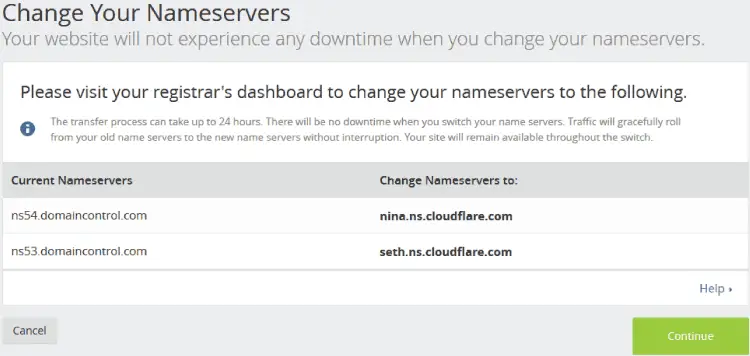
Changing Nameservers to CloudFlare DNS
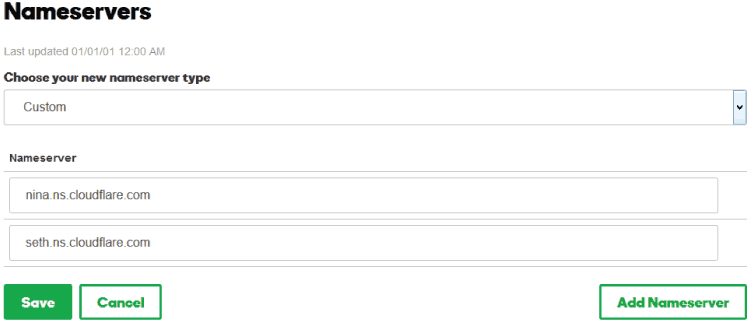
To change your Domain Nameservers to CloudFlare DNS, go to your Domain Registrar account (the website where you have registered your domain). Then go to Manage DNS area of the domain. Click on Change Nameservers button and add CloudFlare Nameservers.
Normally it takes just a few minutes time for this Nameservers change to take effect. But sometimes you may have to wait for upto 48 hours (DNS propagation time).
Once CloudFlare DNS take effect, your website will be superfast and highly secured.
CloudFlare for WordPress
Like any website, CloudFlare can be easily setup in a WordPress website. First create your account in CloudFlare, add your website and then change the Nameservers to that of CloudFlare (as described in the above paragraph).
WordPress users can download and install CloudFlare Plugin, Click Here
CloudFlare Plugin provides 2 important things:
- When to click Spam button for a comment, this information is send to the CloudFlare which in turn updates its spammers list.
- CloudFlare spam fighting engines keeps on updating itself and thus provides better spam protection to your websites and also to other websites that uses it.
CloudFlare Plugin Settings
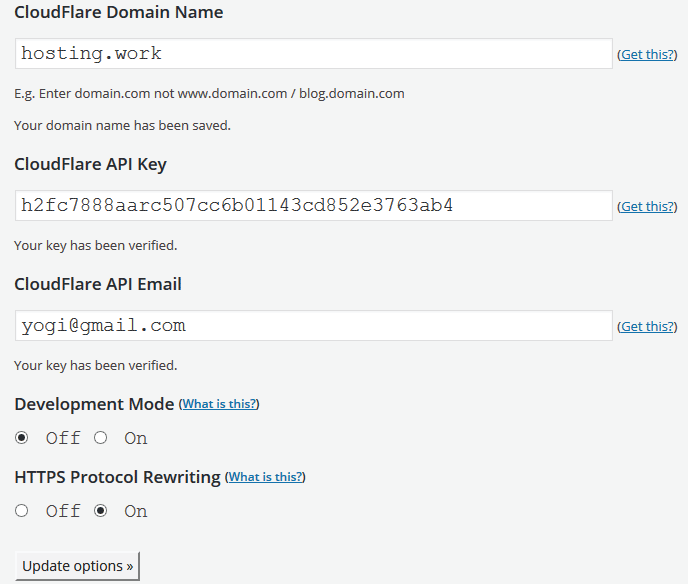
After activating the plugin go to Settings > CloudFlare in your dashboard. The plugin will ask you to enter the following information –
- CloudFlare Domain Name – The name of your domain (without http, https, www) eg. mydomain.com
- CloudFlare API Key – The API key given in your CloudFlare account My Setting area.
- CloudFlare API Email – Your registered email in CloudFlare.
- Development Mode – Choose Off.
- HTTPS Protocol Rewriting – Choose On.
Hope you liked CloudFlare, do share your valuable feedback and questions in the below comments section.
SHARE THIS ARTICLE


Related Tutorials:





ABOUT THE AUTHOR
I hope you enjoyed reading this tutorial. If it helped you then consider buying a cup of coffee for me. This will help me in writing more such good tutorials for the readers. Thank you.
Please Consider Donating us
We are helping millions of Beginners and Professionals to learn new programming technologies.
Please consider donating us:




HELLO EVERYONE
 Welcome to YogiHosting - A Programming Tutorial Website. It is used by millions of people around the world to learn and explore about ASP.NET Core, Blazor, jQuery, JavaScript, Docker, Kubernetes and other topics.
SUBSCRIBE TO NEWSLETTER
Enter your email address to subscribe to this blog and receive notifications of new posts by email.
Join 90K other subscribers